
12 Nights/ 13 Days
Delhi - Udaipur - Dungarpur - Ranakpur – Shahpura - Nimaj - Jaipur - Dholpur - Agra - Delhi
Arrive Delhi by International flight.
A history which encompasses all the various kings and emperors who fixed their royal citadels here– Indraprastha, Lal Kot, Quila Rai Pithora, Siri, Jahanpanah, Tughlakabad, Ferozabad, Dinpanah, Delhi Sher Shahi or then Shahjahanabad. but, combined and integrated into one, these ‘new cities’ have always been called Delhi and howsoever many names it may have acquired, Delhi has always been intrinsically identified with power and imperial sway. You will be met on your arrival with fresh flower garlands by the representative of Exotique Expeditions. You will then be transferred to your HOTEL.
Overnight at the hotel.
Breakfast at the hotel.
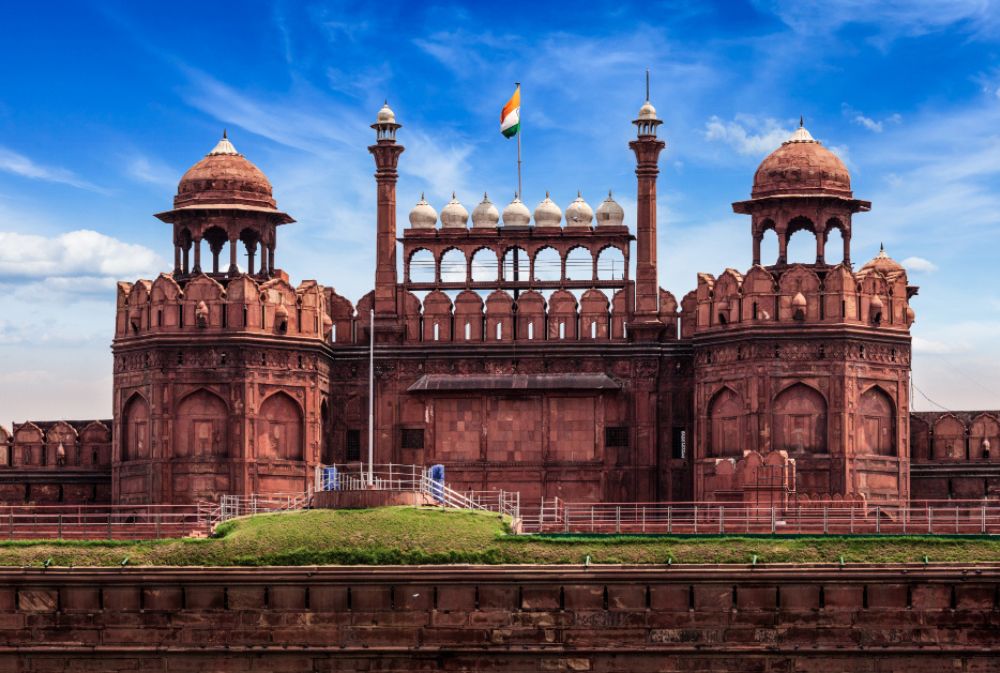
This morning you will be given the city tour of Old and New Delhi. Old Delhi – Visit the former centre of Moghul Power, Old Delhi offers ancient monuments, narrow streets and bustling bazaars. Drive past the vast Red Fort, built in 1648, the Jama Masjid, the greatest mosque in India and completed in 1658 by Shah Jahan who also built the Taj Mahal, and the Raj Ghat, the simple memorial to Mahatma Gandhi. New Delhi – drive past the stately government buildings of the British Era designed by Lutyens, including the India Gate & the Presidential Palace. Continue onto the beautiful Humayun’s tomb of the Mughal era & predecessor of the world-famous Taj Mahal. End the tour at the towering minaret of Qutab Minar.
Overnight stay at the hotel.
Transfer to the airport in time to connect flight for Udaipur.
Udaipur – is the most romantic of all the Rajasthan cities and one of the most exotic places in Asia. The city’s palaces, havelis, temples sets it apart from the rest of the cities. It is also popular for its crafts, paintings and performing arts.
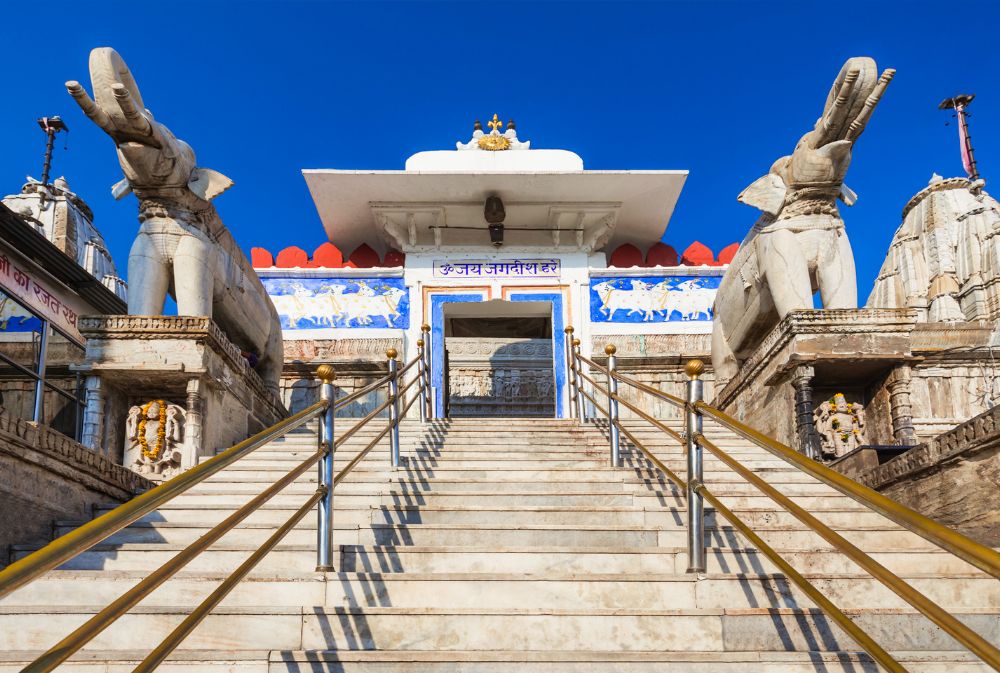
The lake palace is the best example of the unique cultural explosion. Udaipur has rightly been called Venice of the east. You can see the city from a boat or from the rooftop of palaces, the view is marvelous, it makes you forget the world. The smooth rolling hills that surround Udaipur are as overpowering as the city itself In Udaipur, meeting and assistance on arrival and proceed for the city tour of Udaipur. City tour of Udaipur – The tour will cover the magnificent City Palace, the Jagdish temple, the pleasure gardens and a drive around the other nearby lakes.
The city tour will be followed by the boat ride on Lake Pichhola. Enjoy a cruise by boat on the placid waters of Lake Pichola. From the lake you have a wonderful view of the City Palace stretching along the east bank, while the south bank has pleasant gardens running down to the waterside (Subject to water in the Lake).
Drive to Dungarpur. Arrive Dungarpur and check in at the hotel UDAI BILAS PALACE.
Dungarpur – Dungarpur the “City of Hills” was founded in the 13th century and rose to fame under the Guhilot Ahara Suryavanshi Rajputs, who trace their ancestry from the elder branch of the main lineage at Chittorgarh.
Some 700 Years later, Dungarpur is still a picturesque town set amongst the rugged Aravalli mountains. Udai Bilas Palace, Standing poised between the blue waters of Gaibsagar lake on one side and a cove of private reserve forest on the other, is the embodiment of the old world charm of princely India.
An ideal paradise of unhurried hospitality from where one can explore art, bird life and tribal life. Exquisite Rajput architecture, fine mural, miniature paintings and stone carvings will delight the cultured traveler. The Palace – In 1940 Maharawal Laxman Singhji built three new wings around the ” Ek Thambia Mahal” (literally, one pillared palace) and thus created the famous ” courtyard” of the palace. The result is an architectural expression exquisitely detailed.
Still the royal residence, the palace offers accommodation in the large bedrooms – three double, three single, ten suites and six grand suites. Among the 22 rooms, no two rooms are alike in design or decor, each enchants with its own personality, spaciousness and comfort.
The furnishings are mostly from the 20th century art-deco style, marble bathrooms with English fixtures and running hot and cold water. Meals are served either in the banquet hall which displays an impressive collection of well preserved hunting trophies under grand crystal chandeliers or in the more intimate family dining room.
The Menus are predominantly Indian, subtly spiced to suit every guest. Continental or Chinese dishes are served on request. Special candlelit dinners are provided by the lakeside, or picnic lunches at the ancient town of Dungarpur. An exotic swimming pool that spans just short of the lake, a heated Jacuzzi, gymnasium, boating, in-house laundry service, international telephone and fax facilities, doctor on call only adds to the sense of exclusive comfort.
Overnight at the hotel.
Breakfast at the hotel.
Excursions can be arranged to either of the below place. The 8th century AD ancient temple ruins of Arthuna (80 km) OR The 14th century temple of Rishabdeo noted for its intricate carvings and precious stone-studded idol of Lord Kesariyaji (45 km) OR The impressive white marble Muslim shrine at Galiakot, the Mecca of the Bohra sect of Islam (60 kms) OR The 12th century temple of Deo Somnath (25 km) and many temples in Dungarpur town itself.
Overnight at the hotel.
Breakfast at the hotel.
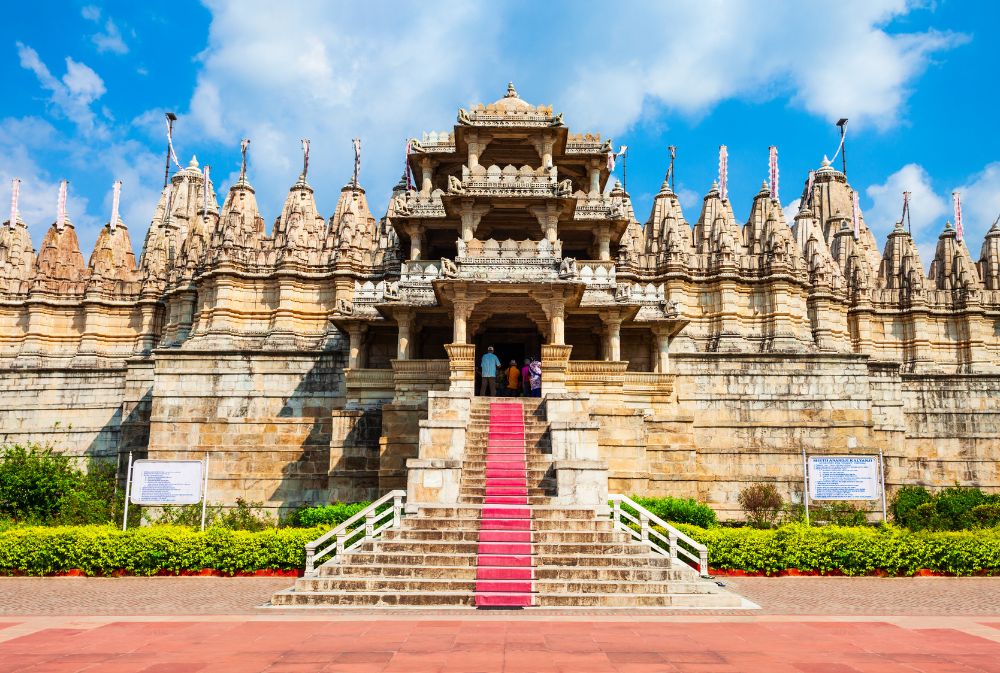
Leave Dungarpur for Shahpura by road. En route visit Ranakpur. RANAKPUR – Cradled in a verdant valley in the valley in the Aravalli Hills, on the banks of the river Maghai, stands one of the five holiest places of the Jain faith, 15th century Ranakpur. Just 96 km from Udaipur, Ranakpur is renowned for its magnificent temples of dazzling white marble.
The four-temple complex, far away from any town or village, is completely in harmony with the ascetic ideology of Jainism. There are none of the irritants that abound near most pilgrimage centers: no jostling crowds, no congested bazaars, no aggressive vendors, no badgering guides, no beggars just peace and serenity that are very conducive to worship. Arrive Shapura and check in at the hotel SHAHPURA BAGH. Shahpura Bagh – was the summer residence of the rulers of Shahpura. The 40-acre estate was granted by the Mughal emperor Shah Jahan to Rajadhiraj Sujjan Singh, Rana Pratap’s great grandson in 1630 AD for successful military campaigns against the Marathas and Afghans.
Overnight at the hotel.
Breakfast at the hotel.
Later in the morning a trip into Shahpura reveals the town’s rich multi-cultural vibrancy and its fascinating arts and crafts tradition. Sit with the Joshi’s and watch a traditional phad, a painting depicting mythology and history, come to life. Get a leather mojadri, or local footwear, made to your size or explore the myriad goods on sale in the marketplace.
Explore the town of Shahpura Bagh; the old city palace reveals the integration of Rajput and Mughal traditions in architecture while the geometrical symmetry of the baoli is an insight into the times that were. A day visit to the family’s farm situated 16 kms from Shahpura beyond Nahar Sagar.
Picnic lunches and farm visits can be organized to spend a day on the farm under the shade of trees of Banyan, amaltas, mango, guava. Dhikhola Fort – which is 10 km from Shahpura Bagh on the Shahpura-Bhilwara road where clients can be taken after a safari for tea/sundowners/ dinner.
The fort is surrounded by 6 lakes, which are full after the rains, overlooks a quaint town with a populace of 5000, and has great views of the surrounding countryside.
Overnight at the hotel.
Breakfast at the hotel.
Leave Shahpura for Nimaj by road (stay possible in Nimaj only from October to March. April till September the accommodation will be provided in Pushkar or Ajmer instead of Nimaj).
Arrive Nimaj and check in at hotel CHHATRA SAGAR CHHATRA SAGAR, NIMAJ (RAJ. ) – Chhatra Sagar is the name of the lake with in the preserve of the Nimaj Estate in district Pali, Rajasthan.
On the reservoir are eleven tastefully designed and well-appointed tents with attached baths. Each tent has its own private sit out overlooking the lake and farmland. Afternoon a tour guided by the members of the family to these settlements makes one understand the traditional, rural Rajasthani lifestyle, which lays stress on harmony, conservation, and the full utilization of natural resources.
Overnight at the hotel.
Breakfast at the hotel.
Leave Nimaj for Jaipur by road. En route visit Ajmer, Pushkar and Barefoot College in Kishangarh.
Ajmer situated in the green oasis wrapped in the barren hills has been a witness to an interesting past. The city was founded by Raja Ajay Pal Chauhan in the 7th Century A.D. and continued to be a major center of the Chauhan power till 1193 A.D. when Prithviraj Chauhan lost it to Mohammed Ghauri.since then, Ajmer became home to many dynasties, which came and left leaving behind indelible marks of their culture and traditions on the city’s history, converting it to an amalgam of various cultures and blend of Hinduism and Islam.
Pushkar is a mellow, serene and bewitching little town, which attracts those in search of some respite from the tumult of India. Pushkar is right on the edge of the desert and is only 11 kms from Ajmer but separated from it by Nag Pahar, the snake mountain This traveler-friendly town clings to the side of the small Pushkar Lake with its many bathing ghats and temples.
For Hindus, Puhskar is a very important pilgrimage centre and you’ll see plenty of Sadhus (individuals on a spiritual search). Pushkar boasts temples, though few are as ancient as you might expect at such an important pilgrimage site, since many were deserted by Aurangzeb and subsequently rebuilt. The most famous is the Brahma Temple, said to be one of the few temples in the world dedicated to this deity.
It’s marked by red spire, and over the entrance gateway is the hans, or goose symbol, of Brahma, who is said to have personally chosen Pushkar as its site.
Barefoot College – The SWRC (The Social Work and Research Centre) is one of India’s best known NGOs credited with having pioneered the Barefoot College concept in which villagers with little formal education are trained in a wide variety of relevant technical skills, ranging from hand pump repair to installation of solar energy system. The centre works at several levels. The Tilonia unit is working on health, drinking water, crafts, education, alternative energy and women’s issues among a population of nearly one hundred thousand people.
Jaipur the `Pink City’ as it is popularly known, is the bustling capital of Rajasthan.
`Pink city’ because most of the buildings are pink in colour in the old city. The city retains its old self, at the same time it is moving fast as a modern city. You can see extreme contrast on the streets of Jaipur. On one side you have cars, buses and motorbikes, on the other side you can see camel carts.
On one side there are traditionally dressed men and women in their turbans and colorful long skirts and blouses. On the other hand you can see modernly dressed Indians and foreign tourists having a bite in their favorite American restaurants.
Arrive Jaipur and check in at the hotel ALSISAR HAVELI.
More than five centuries ago, the grandson of Maharaja Udaikaran of Amer, Rao Shekhaji, founded the sub-clan popularly known as ‘Shekhawat’.
Alsisar haveli is owned by this branch of the Kachawa clan of Rajputs. The descendants of the family have restructured and refurbished their old mansion (Haveli) into a modern day heritage hotel to give the guest a feel of Raj days.
Alsisar Haveli lies tucked away in the heart of pink city, Jaipur. It brings back to life the grandeur of the old days and is a memorable regal Rajasthani experience for the guests.
The Haveli incorporates the finesse of traditional Rajput architecture and a site to behold. The large elevated platform that dominates the central area of the ground floor and once used for get-togethers by the gents of the house is now open to guests who can witness puppet shows and folk dances while enjoying their snacks or drinks
Overnight at the hotel.
Breakfast at the hotel.
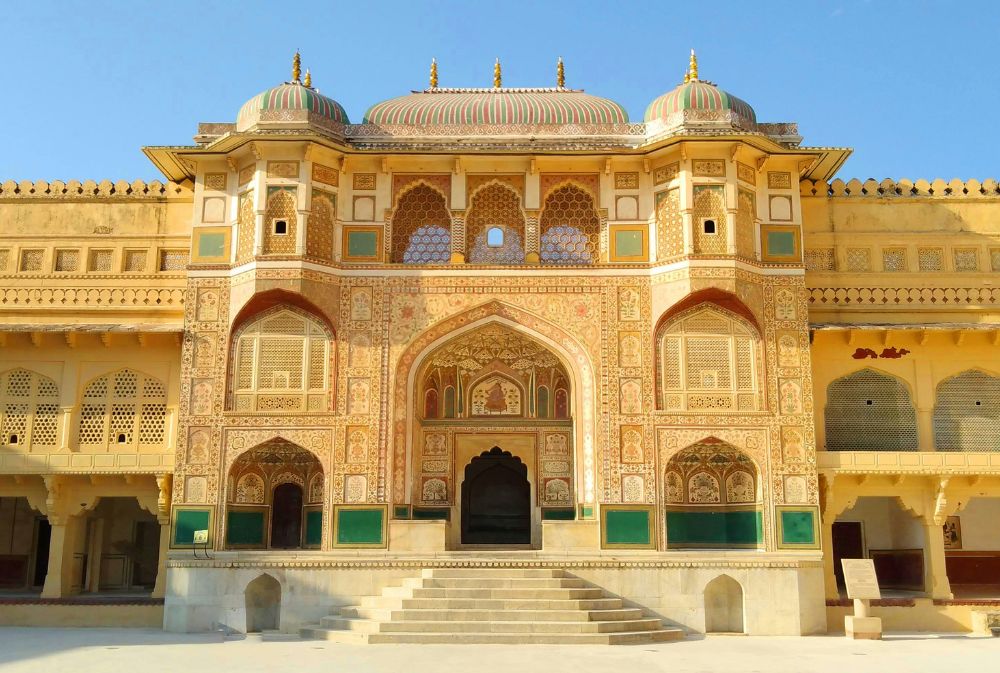
This morning you will be given excursion to Amber Fort. Tour of the impressive Amber Fort, situated on a ridge just outside Jaipur City.
At the foot of the hill you will mount your caparisoned elephant for the slow but steady climb up to the main gate, making your entrance in the time honoured fashion.
The Fort, completed in the early 18th century, took over 100 years to build and now, although deserted, offers a fascinating insight into the lifestyle of the Moghul ruling families. This afternoon you will be given the city tour of Jaipur – Your tour will include the imposing City Palace, still home to the Maharaja although several of the rooms are now open to the public. Many antiques and artefacts belonging to the ruling family are housed here, including a collection of weaponry.
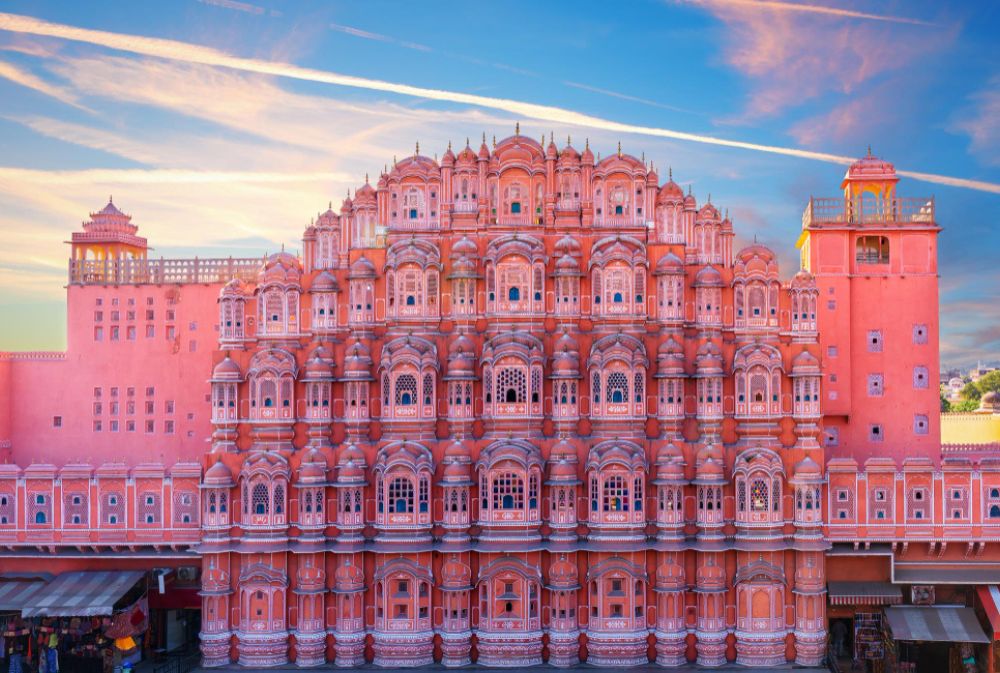
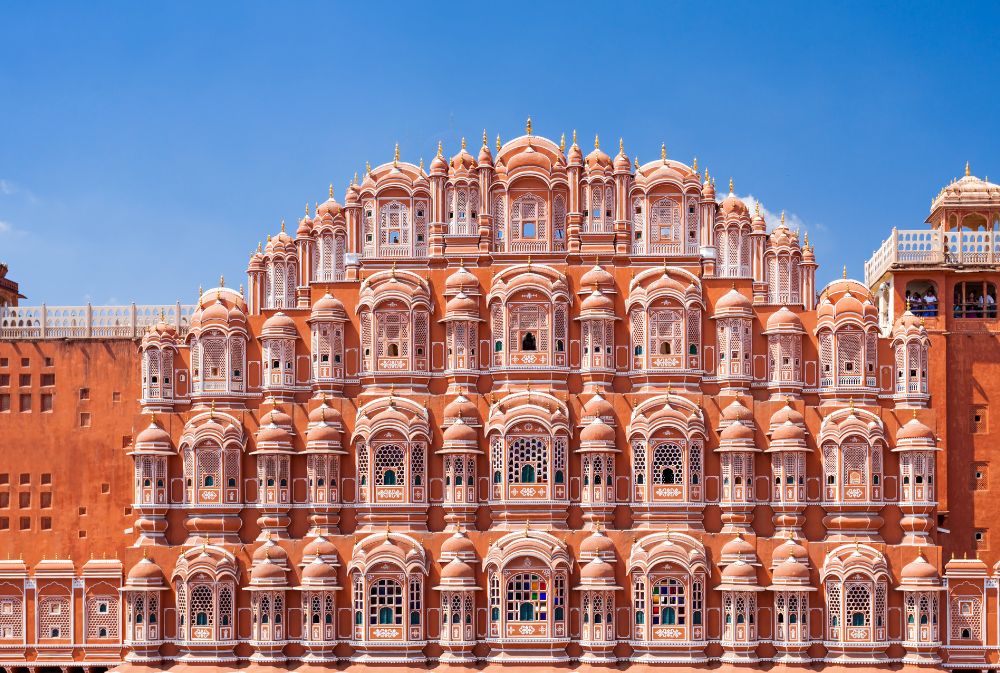
You will also visit the Hawa Mahal, “Palace of the Winds”, and the open-air Jantar Mantar Observatory to see the vast astronomical instruments. Enjoy a stroll through the colorful bazaar before returning to your hotel.
Overnight at the hotel.
Breakfast at the hotel.
Leave Jaipur for Dholpur by road Dholpur is named as Dhawalpuri after its ruler Dhawal Deo, once the ruler of the city, its name was distorted with passage of time and got its present name Dholpur En-route visit Fatehpur Sikri.
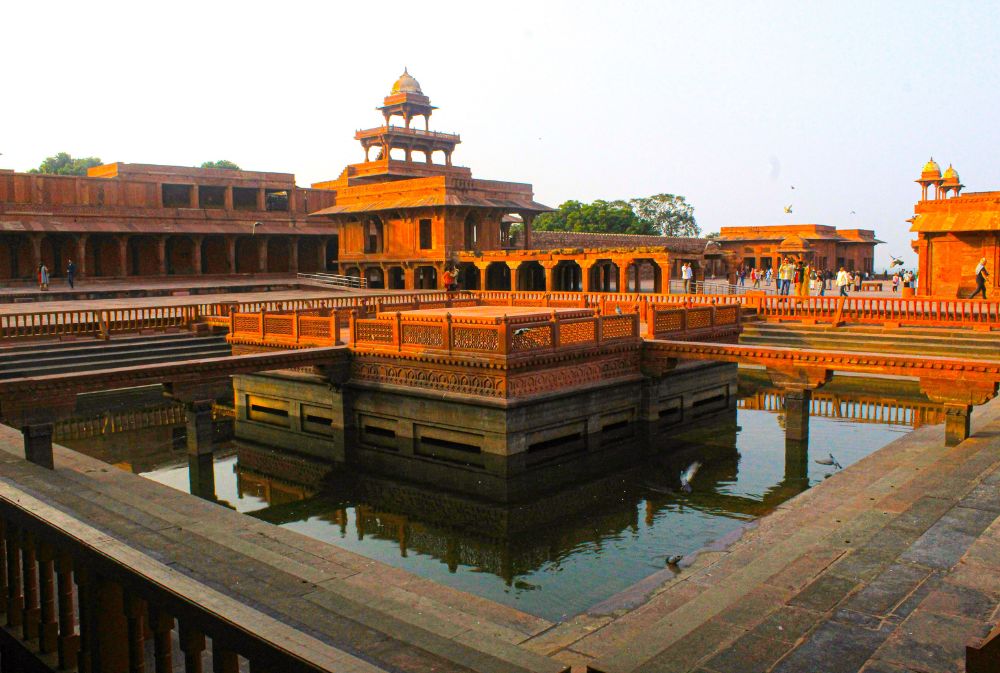
Fatehpur Sikri – Impressive sandstone fortress of Fatehpur Sikri. The fort was built in the 16th century and only occupied for a few years before being abandoned, leaving the buildings in virtually perfect conditions. Continue drive to Agra. Upon arrival in Agra – check-in at the hotel.
Thereafter, visit the Red Fort, which was built by Akbar as his citadel over the years 1563-73 in the finest architectural style Arrive Dholpur and check at the hotel Raj Niwas Palace.
The palace has a Library, a pool table, a movie theatre, a business centre and a gift and a souvenir store. It is surrounded by lush green manicured gardens The interiors are all inspired by traditional design themes.The rooms are very spacious, with high ceilings Within these luxurious surroundings are found modern amenities, a blend of contemporary comfort and traditional style.
Overnight at the hotel.
Breakfast at the hotel.
This morning you will check out from the hotel and drive down to Agra.
Agra has a rich historical background, which is amply evident from the numerous historical monuments in and around the city.
Though the heritage of Agra city is linked with the Mughal dynasty, numerous other rulers also contributed to the rich past of this city. Modern Agra was founded by Sikandar Lodhi (Lodhi dynasty; Delhi Sultanate) in the 16th century.
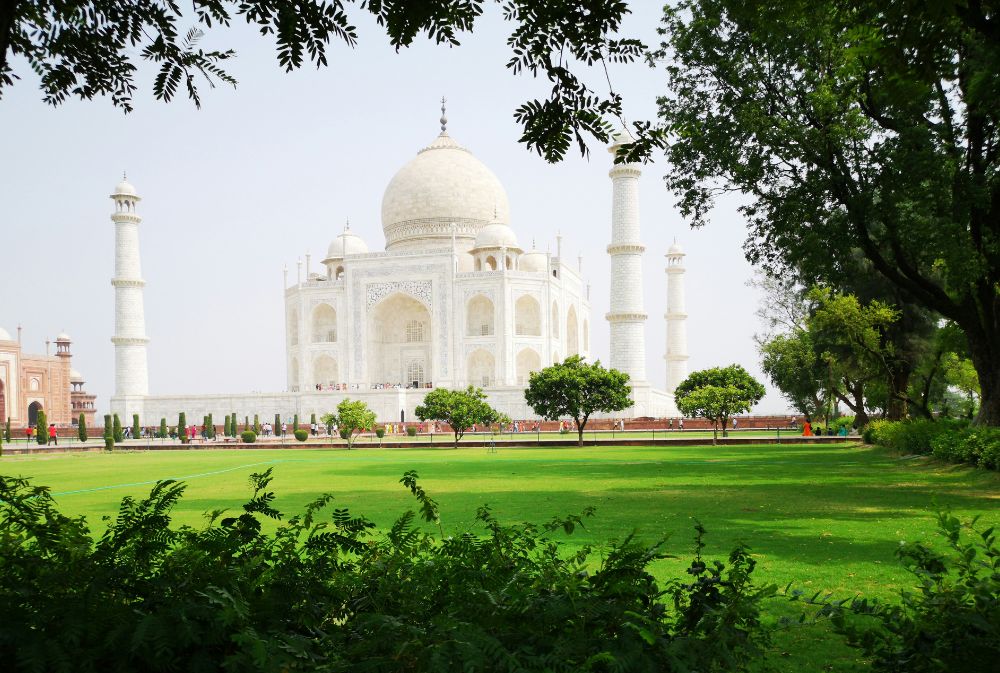
Babar (founder of the Mughal dynasty) also stayed for sometime in Agra and introduced the concept of square Persian-styled gardens here. Agra came to its own when Shahjahan ascended to the throne of Mughal Empire. He marked the zenith of Mughal architecture, when he built the Taj in memory of his beloved wife Mumtaz Mahal.
Upon arrival check in at the HOTEL.
Later during the day, you will visit Agra Fort and Sikandra.
Red Fort – lies on the bend of the river Yamuna, almost in the heart of the town. Akbar built it as his citadel over the years 1563-73 in the finest architectural style. It has imposing gates and walls of red sandstone and a moat. Sikandra, which is situated 8 km north-east on the Agra-Delhi road. It is one the same side of the river Yamuna as the Taj. Sikandra was built in 1492 by Sikander Lodhi, a ruler of one of the last dynasties of the Delhi Sultanate.
Akbar, in his time, ordered the construction of Sikandra again, this time as a site for his mausoleum but he died before it could be completed. The work was completed by his son Jehangir in 1613. The tomb is a combination of Muslim and Hindu architectural styles. The building of red sandstone is four storeys tall, approximately 31 metres in height. The first three storeys are of red sandstone, while the fourth is entirely of marble.
Overnight at the hotel.
Visit Taj Mahal at Sunrise (Taj Mahal is closed on Fridays).
Visit Taj Mahal – Little needs to be said about this architectural wonder which is always the soul raison-de-etre for every tourist’s visit to Agra. Built by Shah Jahan, the Taj is a white marble memorial to his beautiful wife Mumtaz Mahal. This monument took 22 years to be completed and was designed and planned by Persian architect Ustad Isa. Apart from it’s stunning design balance and perfect symmetry, the Taj is also noted particularly for its elegant domes, intricately carved screens and some of the best inlay work ever seen.On closer look, the lettering of the Quran verses around the archways appears to be uniform, regardless of their height. The lettering spacing and density has been customized to give this impression to the beholder. Other illusionary effects have been accounted for in the geometry of the tomb and the tall minarets. The impressive pietra dura artwork includes geometric elements, plants and flowers, mostly common in Islamic architecture. The level of sophistication in artwork becomes obvious when one realizes that a 3-cm decorative element contains more than 50 inlaid gemstones Return to the hotel for breakfast. After check, out you will drive to Delhi by road. Arrive Delhi and check in at the HOTEL.
Overnight at the hotel.
Share your details below and our travel expert will get in touch with you shortly

Exotique India
Assistance
Exotique India
Hey, need help regarding tour? Lets have a quick chat